


The most common disease provoked by pathogenic microorganisms from the group of dermatomycoses is foot fungus.The parasite affects not only the phalanges of the fingers and the nail plates of the lower limbs, but also the folds between the toes and the sole.The disease is accompanied by characteristic symptoms and requires a long therapeutic course with antifungal drugs.How to treat foot fungus and how to recognize it, we will consider in this article.
reasons
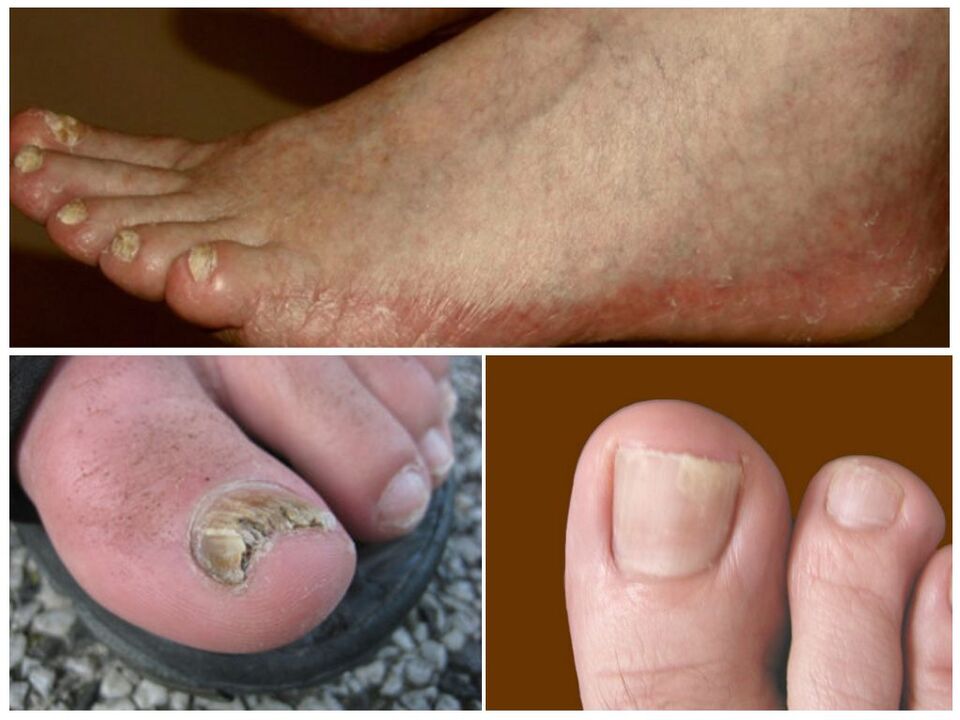
Parasites get on the skin and in the presence of a favorable environment, especially heat and high humidity, they multiply quickly, as a result of which the epithelium is injured and its functionality is impaired.Treatment of skin fungus on the legs is more effective in the early stages of the pathological process.
It is worth knowing: in most clinical pictures, the causative agent of mycosis of the feet is fungi of the Candida family and trichophytons of certain varieties.
Against the background of a prolonged course of the disease, the risk of damage to the deeper layers of the skin increases significantly.In advanced cases, parasites can penetrate the circulatory system, which leads to disruption of the functioning of internal organs.In such a situation, the treatment is very long and difficult, powerful drugs are used.
You can catch the fungus in a sauna and bath, as well as in other similar places where there is high humidity and heat.People often get infected in pedicure and manicure rooms where the tools are not disinfected.Wearing foreign shoes is another factor leading to infection.
Factors leading to the activation of the fungus:
- Metabolic disorders in the body, overweight;
- Diabetes mellitus type 1 or 2;
- Varicose veins of the lower extremities;
- Vascular disorders;
- Pathologies of an autoimmune nature (for example, Raynaud's disease);
- Flat feet, poor quality shoes;
- Lack of a balanced diet, which leads to a severe lack of vitamins and minerals;
- Violation of the immune system, etc.
The infection also occurs under the influence of such circumstances: poor hygiene, sharing towels, towels, etc.with a sick person.
Types and symptoms
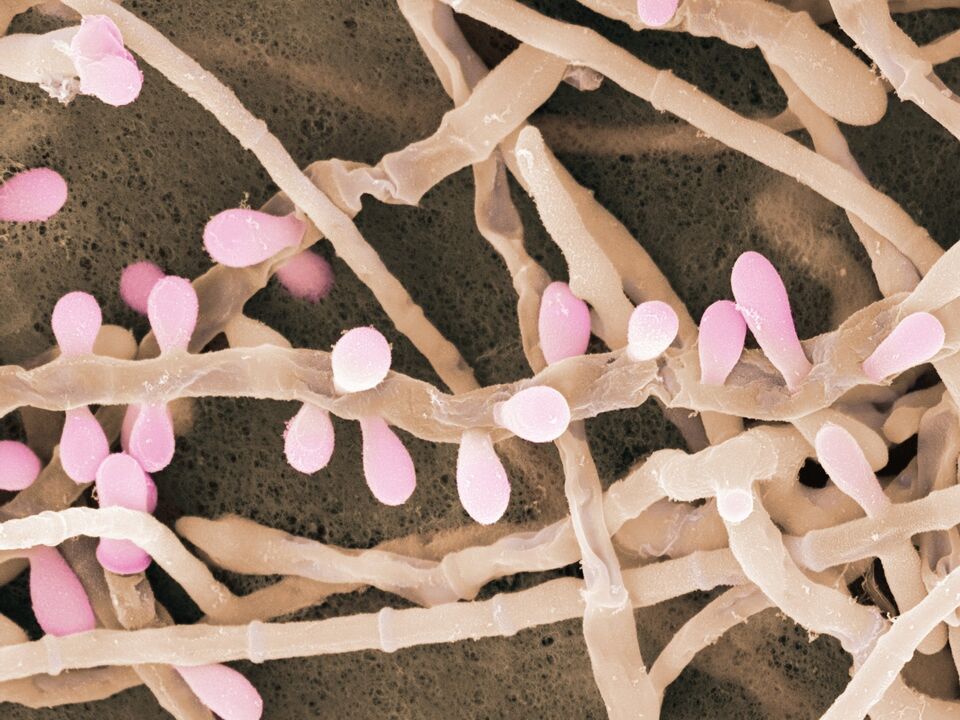
In medical practice, foot and nail fungus is classified according to the specific pathogen that is present on the skin.Mixed infections caused by the simultaneous parasitism of two or more types of fungi are often diagnosed.The type of pathogen should be taken into account when prescribing subsequent treatment.
Types of pathogenic microorganisms:
- Trichophyton rubrum.The favorite place of the parasite is in the folds of the skin, the spaces between the toes and the cracks on the heels.The symptoms of this type of fungus on the feet are as follows: deep cracks and erosions are observed, the integrity of the skin is disturbed, the stratum corneum is actively growing.
- Trichophyton mentagrophytes in most cases leads to the development of allergies, which are manifested by strong itching and a burning sensation.How to recognize this type of fungus?Skin separation appears on the leg, there are many small cracks that hurt.
- Trichophyton interdigitele.This parasite settles between the fingers, between the fingers itches and itches.If there is no treatment, cracks and erosions appear over time and the nail plate is affected.
- Candida is quite common.Signs of foot fungus: areas of the feet become white, sometimes gray, spots appear that tend to increase in size.In this case, patients always complain of itching and pain as a result of cracking of the skin.
Note: pathogenic microorganisms are divided into several types - molds, yeasts and dermatophytes.They provoke foot diseases such as rubrophytosis, epidermophytosis, candidiasis and onychomycosis of the feet.In turn, the pathologies that are united in a group called "rubromycosis" mean diseases of the feet.They are classified into subtypes depending on the clinical manifestations - vesicular, membranous, moccasin-like.
Fungal infection of the feet is accompanied by symptoms that are determined by the stage of the foot disease:
- The early stage of development of the pathology takes place against the background of itching of the legs, hyperemia of the skin and slight swelling.Small surface cracks are sometimes observed;
- The middle stage is characterized by the appearance of spots that tend to grow, the skin peels, itches and has a burning sensation;
- These pictures show extensive damage when there is no treatment.Fungus on the skin of the feet spreads to the nails.The nail plate loses its healthy shine, quickly crumbles and collapses.
In the absence of timely treatment, the disease passes into a chronic stage, periodically the patient improves, but at the slightest stress or reduced immunity, the disease appears again.Often the picture is complicated by the addition of a bacterial infection, which requires the use of antibacterial therapy.
Treatment of foot fungus
Symptoms of foot fungus and treatment are interrelated, as the therapeutic course is prescribed based on clinical manifestations and the type of parasite.The following drugs are used to level inflammatory processes, swelling and remove the excess stratum corneum:
- Every day, the affected area is smeared with salicylic petroleum jelly.Manipulation is carried out twice a day, the duration of treatment is 7 days.
- Fungal infections of the feet are treated with lotions based on salicylic alcohol and lactic acid.They should be mixed with petroleum jelly.Apply a compress for two days, after which you can easily remove the keratinized areas.
- To reduce the severity of the inflammatory process, tar or sulfur ointment is applied to the legs.These products have antiseptic properties and help relieve inflammation and swelling.
- If slight peeling is observed, then it is permissible to use baths with the addition of soda.
- For itching of the ulcers, glucocorticosteroid creams are used.These medications contain hormones and should not be used alone or for long periods of time.The application is carried out according to the principle of pulse therapy: it is applied for several days, a break is taken, during which the effect is evaluated, if there is no effect, it is repeated again, etc.
Important: if the nail is damaged, it is better to use a keratolytic plaster or antifungal nail polish.
When asked how to treat foot fungus, doctors recommend drugs that have different dosage forms - ointment, emulsion, gel, cream, tablets.
How to treat advanced stage fungus?If the pathological process has covered a large area and pronounced symptoms appear, then systemic treatment with antifungal drugs is necessary.
During the treatment, you must follow all the doctor's recommendations, treat your feet every day and take tablets in the required dose.Therapy is continued until negative laboratory results are obtained.In the case of nail fungus, it continues until the growth of a new nail plate.
Prevention of foot fungus

It is easy to get infected with fungus, but it is extremely difficult to cure.The patient will have to be patient as the process is relatively long.To prevent the appearance of fungus or its reappearance after treatment, you must follow the following rules:
- When visiting a bath or sauna, you should always bring your personal slippers with you to avoid standing barefoot on the floor.You can only use a personal towel, towel, etc.
- At home, regular hygienic cleaning of the bathtub and footrest with products that contain chlorine is necessary.
- Fungi love heat and moisture, so it is necessary to fight hyperhidrosis of the lower extremities - use baths with chamomile, yellow flowers, potassium permanganate and onion peels.
- Specialized talc will help prevent fungus.It can be poured into a sock or shoe and periodically treated with a foot product.
- Systematically treat the skin of the lower limbs with geranium and tea tree oil.These essential oils moisturize the skin and have an antifungal effect.
- Disinfection of shoes - first they are wiped with a cotton swab dipped in a 25% solution of formaldehyde or 70% vinegar.Then place it in a sealed envelope and seal it tightly.After a day, remove the shoes and air them out.
If the focus of the fungal infection is small, then with the help of antifungal creams and methods of prevention, the disease can be quickly overcome.Without treatment, the disease will progress and quickly spread to healthy areas.
The process of treating fungus is always long.The earlier the treatment starts, the faster the patient recovers.For neglected paintings, restoration takes not months, but years.